Field Test Studies
Alginate Oligosaccharide Synergistic Effect Experiment
1. Experimental Site
Gaomi City, Weifang City, Shandong Province, China.
2. Experimental Design
Wheat was sown using an integrated seed-fertilizer method. A total of three treatments involving alginate oligosaccharide (AOS) were established. The conventional treatment received 15 kg pure nitrogen per 667 sq.m. The experimental design is shown in Table 1. All other field management practices were kept consistent.
Table 1 Experimental Design
|
Treatment |
Basal Fertilizer |
Top-dressing |
Foliar Fertilizer |
||||
|
Urea |
MAP |
MOP |
AOS |
Urea |
AOS |
||
|
CK (N reduction) |
13 kg/ 667 sqm |
12 kg/ 667 sqm |
5.3 kg/ 667 sqm |
0 |
0 |
0 |
0 |
|
T1 (Conventional) |
18 kg/ 667 sqm |
12 kg/ 667 sqm |
5.3 kg/ 667 sqm |
0 |
5 kg/ 667 sqm |
0 |
0 |
|
T2 (N reduction + AOS) |
13 kg/ 667 sqm |
12 kg/ 667 sqm |
5.3 kg/ 667 sqm |
15 g/ 667 sqm |
3.75 kg/ 667 sqm |
5 g/ 667 sqm |
3 g/667 sqm, foliar sprayed twice: once at jointing and once at filling. |
Note: Urea price: 2 ¥/kg; Monoammonium phosphate (MAP) price: 4.8 ¥/kg; Muriate of potash (MOP) price: 3.6 ¥/kg.
Results Investigation
(1) Reviving Stage Investigation
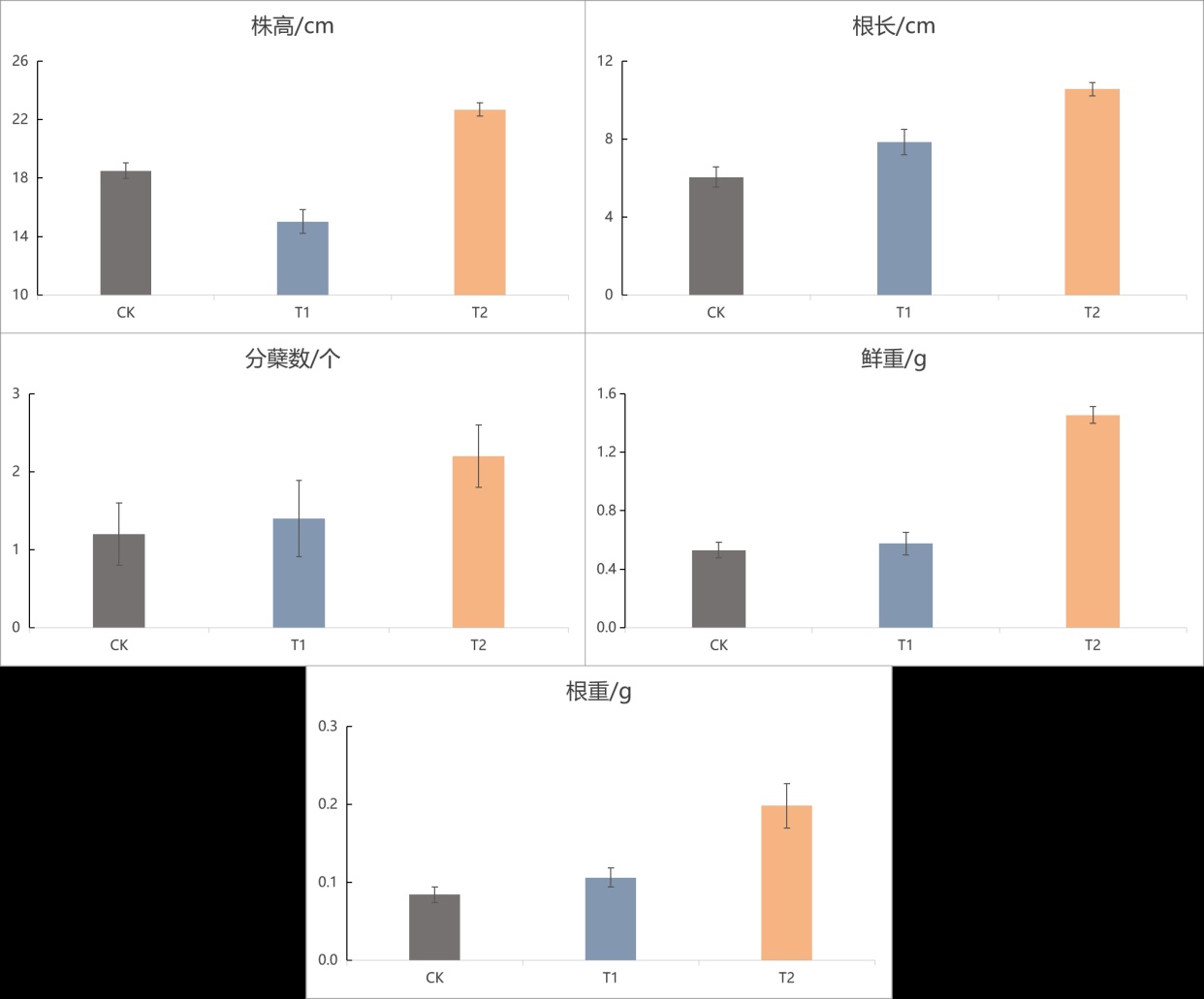
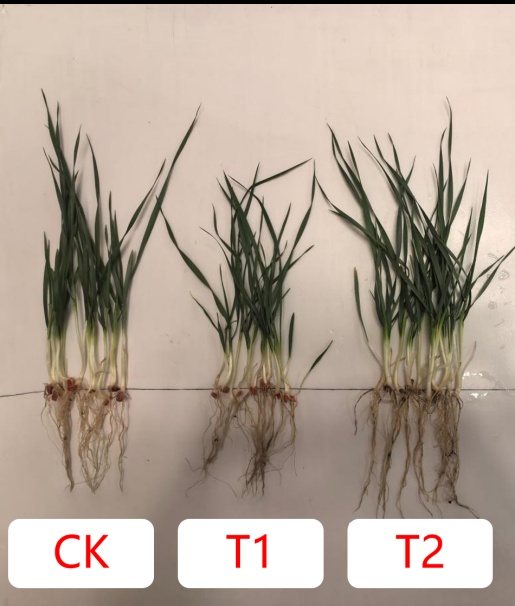
The reviving-stage agronomic trait survey revealed that nitrogen reduction combined with AOS application significantly promoted wheat growth after reviving. Compared with the control (CK), plant height, root length, tiller number, fresh weight, and root weight of T2 increased by 51.00%, 34.69%, 57.14%, 153.31%, and 81.82%, respectively.
Table 2 Agronomic Traits at Reviving Stage
|
|
Plant Height (cm) |
Root Length (cm) |
Tiller No. |
Fresh Weight (g) |
Root Weight (g) |
|
CK |
18.50±0.54 |
6.04±0.52 |
1.20±0.40 |
0.53±0.05 |
0.08±0.01 |
|
T1 |
15.02±0.82 |
7.84±0.66 |
1.40±0.49 |
0.57±0.08 |
0.11±0.01 |
|
T2 |
22.68±0.45 |
10.56±0.34 |
2.20±0.40 |
1.45±0.06 |
0.20±0.03 |
(2) Jointing Stage Investigation
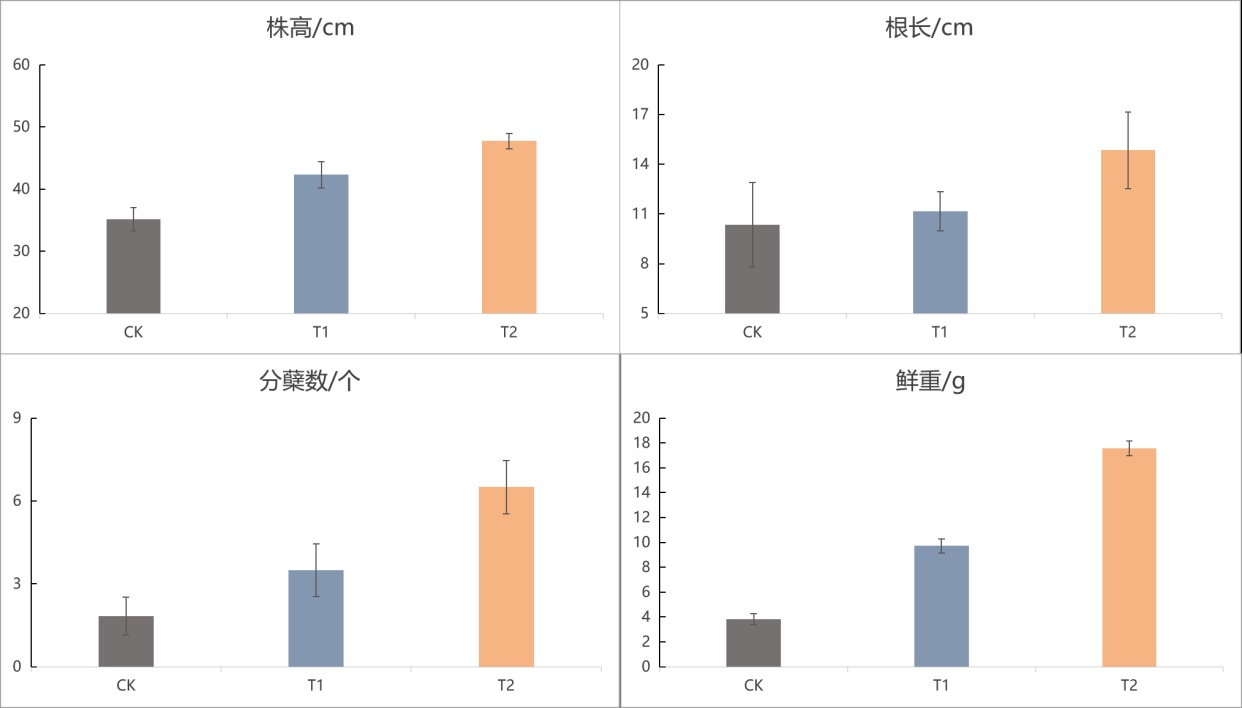
Table 3 Agronomic Traits at Jointing Stage
|
|
Plant Height (cm) |
Root Length (cm) |
Tiller No. |
Fresh Weight (g) |
|
CK |
35.17±1.89 |
10.33±2.54 |
1.83±0.69 |
3.83±0.46 |
|
T1 |
42.30±2.09 |
11.17±1.18 |
3.50±0.96 |
9.72±0.55 |
|
T2 |
47.73±1.23 |
14.85±2.31 |
6.50±0.96 |
17.56±0.58 |
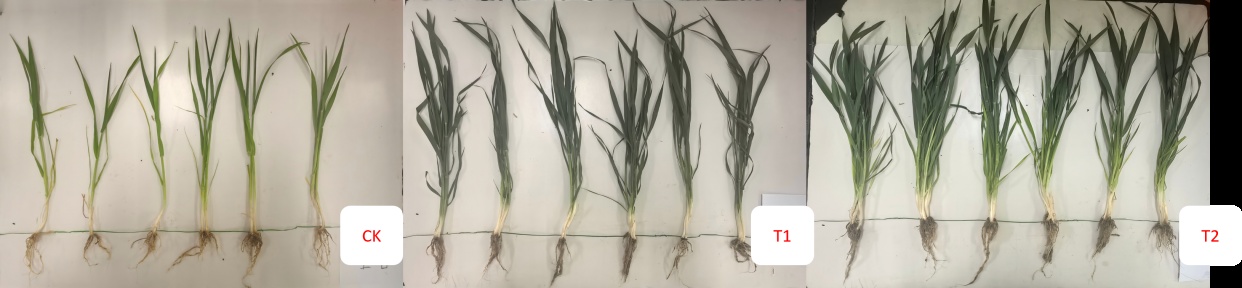
The jointing-stage agronomic trait survey showed that nitrogen reduction combined with AOS application further promoted wheat growth at the jointing stage. Plant height, root length, fresh weight, and tiller number all increased significantly. Compared with the conventional treatment T1, these indicators in T2 increased by 12.87%, 32.95%, 80.66%, and 85.71%, respectively.
(3) Booting Stage Investigation
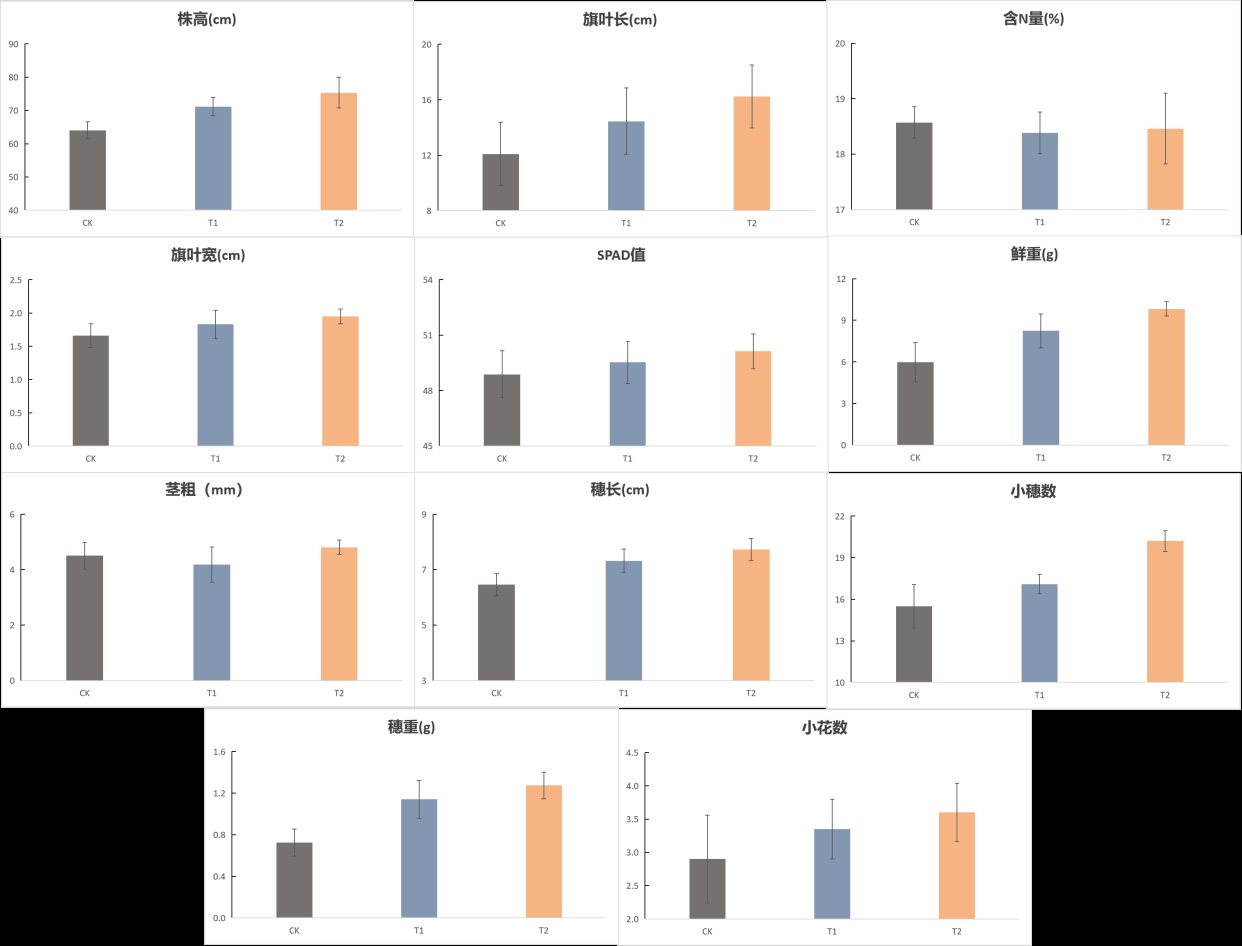
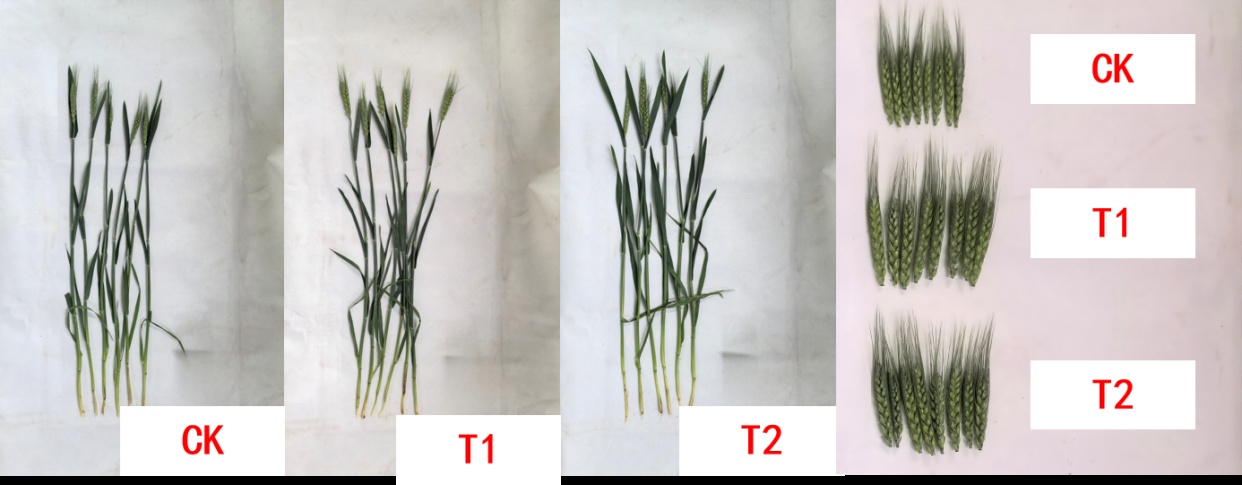
The booting-stage agronomic trait survey revealed that, based on basal AOS application, the first foliar spray of AOS at the jointing stage further promoted wheat growth, particularly by increasing flag leaf size and spike development. Compared with conventional T1, T2 showed increases of 12.32% and 6.56% in flag leaf length and width, respectively. SPAD value and leaf nitrogen content also increased slightly, but the differences were small. In terms of spike traits, spike length increased by 0.31 cm, spikelet number by 3.1, single-spike weight by 0.14 g, and floret number per spike by 15.44. Promoting flag leaf and spike growth lays a solid foundation for high wheat yield. In addition, compared with T1, T2 increased plant height, stem diameter, and fresh weight by 5.87%, 15.35%, and 19.08%, respectively.
Table 4 Agronomic Traits at Booting Stage
|
|
Plant Height (cm) |
Flag Leaf Length (cm) |
Flag Leaf Width (cm) |
SPAD Value |
N Content (%) |
Stem Diameter (mm) |
|
CK |
64.05±2.53 |
12.09±2.28 |
1.66±0.18 |
48.88±1.27 |
18.57±0.29 |
4.50±0.48 |
|
T1 |
71.18±2.74 |
14.45±2.40 |
1.83±0.21 |
49.53±1.14 |
18.38±0.38 |
4.17±0.63 |
|
T2 |
75.36±4.56 |
16.23±2.28 |
1.95±0.11 |
50.12±0.93 |
18.46±0.64 |
4.81±0.26 |
|
|
Fresh Weight (g) |
Spike Length (cm) |
Spikelet No. |
Spike Weight (g) |
Floret No. |
|
CK |
5.98±1.41 |
6.46±0.40 |
15.50±1.57 |
0.73±0.13 |
2.90±0.66 |
|
T1 |
8.23±1.23 |
7.32±0.43 |
17.10±0.70 |
1.14±0.18 |
3.35±0.45 |
|
T2 |
9.82±0.51 |
7.73±0.40 |
20.20±0.75 |
1.28±0.13 |
3.60±0.44 |
(4) Filling Stage Investigation
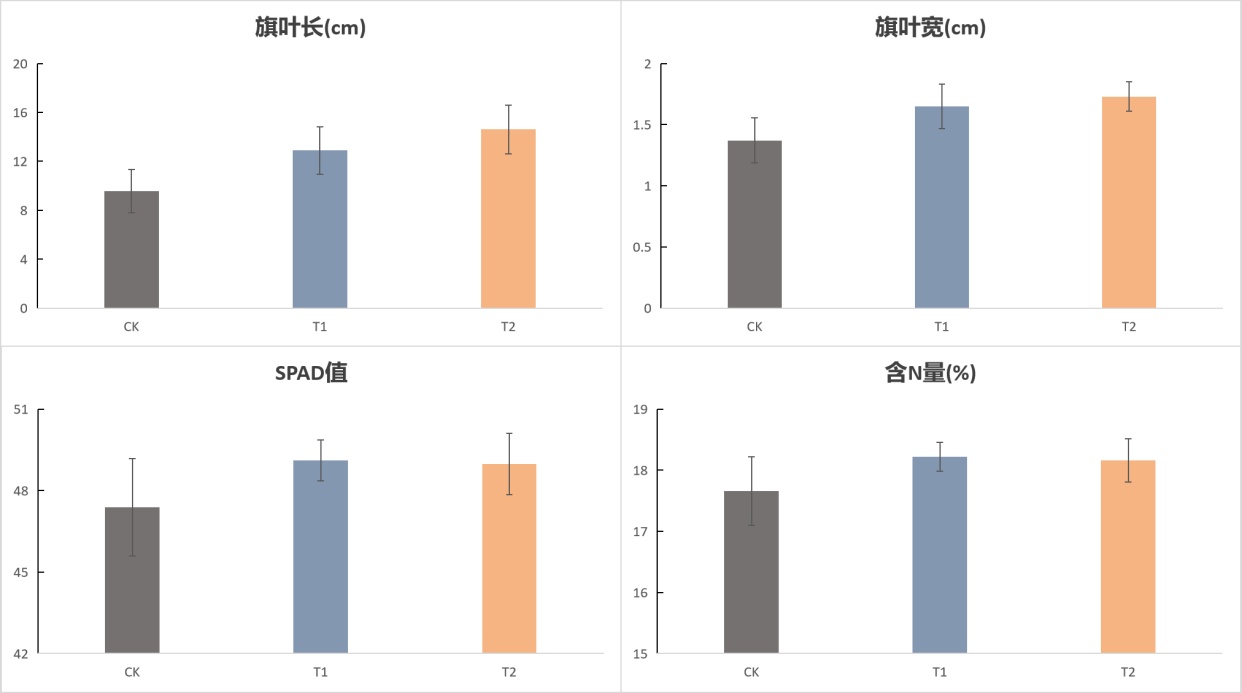
Table 5 Agronomic Traits at Filling Stage
|
|
Flag Leaf Length (cm) |
Flag Leaf Width (cm) |
SPAD Value |
N Content (%) |
Spike Length (cm) |
Spike Weight (g) |
Grains per Spike |
|
CK |
9.54±1.77 |
1.37±0.18 |
47.39±1.79 |
17.66±0.56 |
6.80±0.59 |
2.65±0.49 |
28.70±5.14 |
|
T1 |
12.89±1.94 |
1.65±0.18 |
49.11±0.76 |
18.22±0.24 |
7.09±0.61 |
2.44±0.51 |
29.80±3.79 |
|
T2 |
14.62±1.99 |
1.73±0.12 |
48.98±1.12 |
18.16±0.35 |
7.47±0.32 |
3.58±0.32 |
41.00±2.32 |
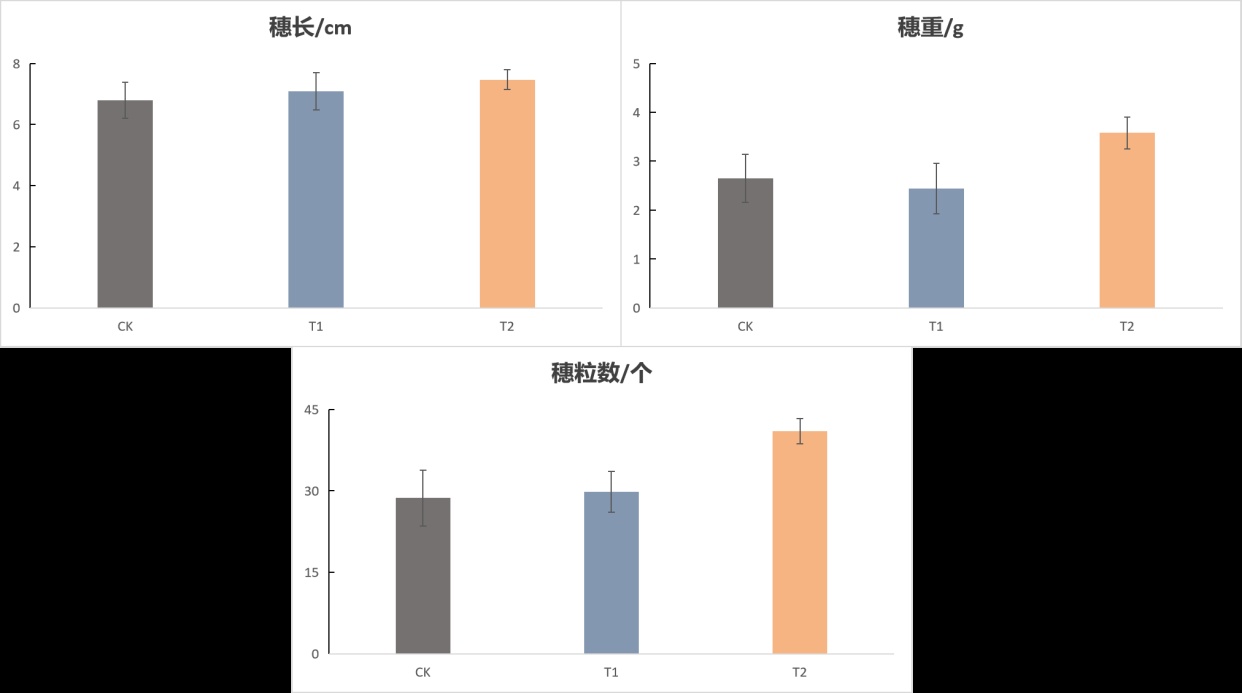
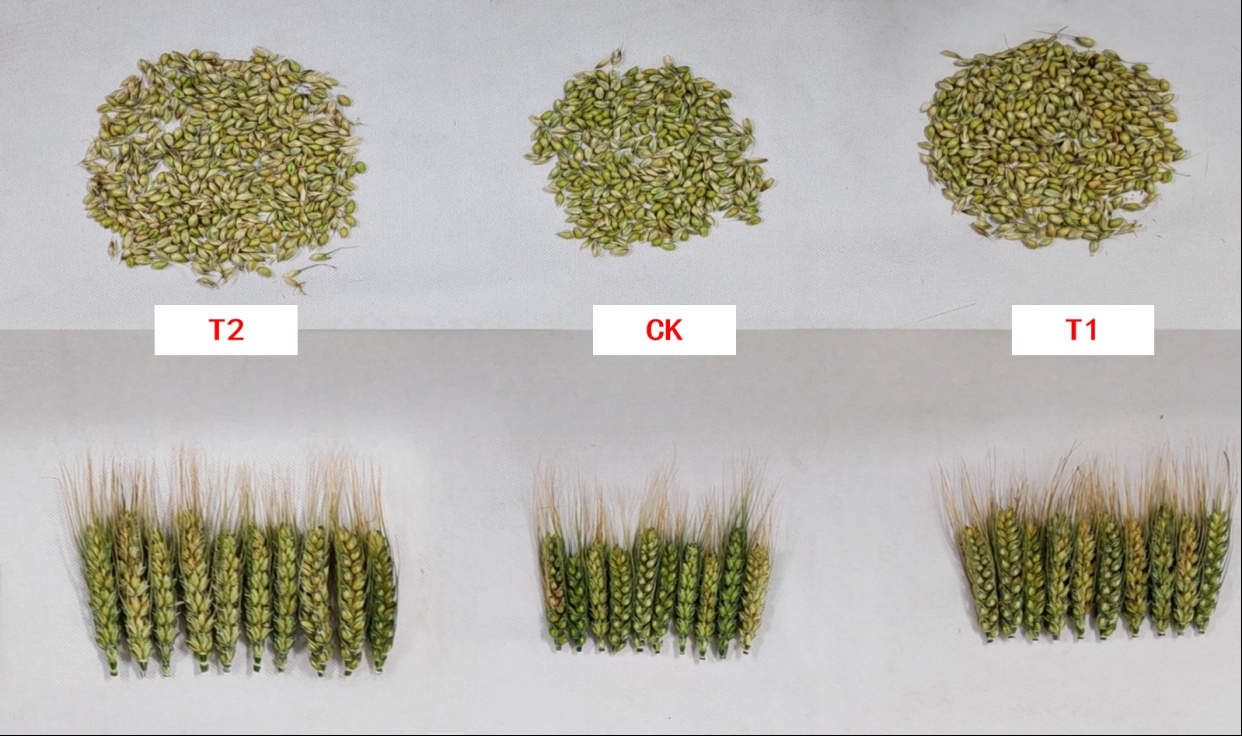
The filling-stage agronomic trait survey showed that after two foliar sprays of AOS, flag leaf and spike growth were further promoted. Compared with conventional T1, T2 increased flag leaf length and width by 13.42% and 4.85%, respectively. In terms of spike traits, T2 increased spike length, spike weight, and grains per spike by 5.36%, 46.72%, and 37.58%, respectively. Compared with the booting stage, the gaps in spike weight and grains per spike widened, indicating that foliar spraying of AOS can accelerate the filling rate and promote more florets to form grains, which is beneficial for further yield increase.
(5) Maturity Stage Investigation
Table 6 Spike Traits at Maturity Stage
|
|
Spike Length (cm) |
Spike Weight (g) |
Grains per Spike |
Grain Weight per Spike (g) |
|
CK |
6.18±0.64 |
1.40±0.34 |
24.50±6.84 |
1.58±0.25 |
|
T1 |
6.98±0.30 |
2.24±0.29 |
33.80±4.79 |
1.62±0.24 |
|
T2 |
7.63±0.40 |
2.60±0.12 |
40.00±3.13 |
1.71±0.10 |
The maturity-stage spike trait survey showed that wheat treated with AOS exhibited significantly increased spike length, single-spike weight, grains per spike, and grain weight per spike at maturity. Compared with conventional T1, these indicators in T2 increased by 9.31%, 16.07%, 18.34%, and 5.56%, respectively.
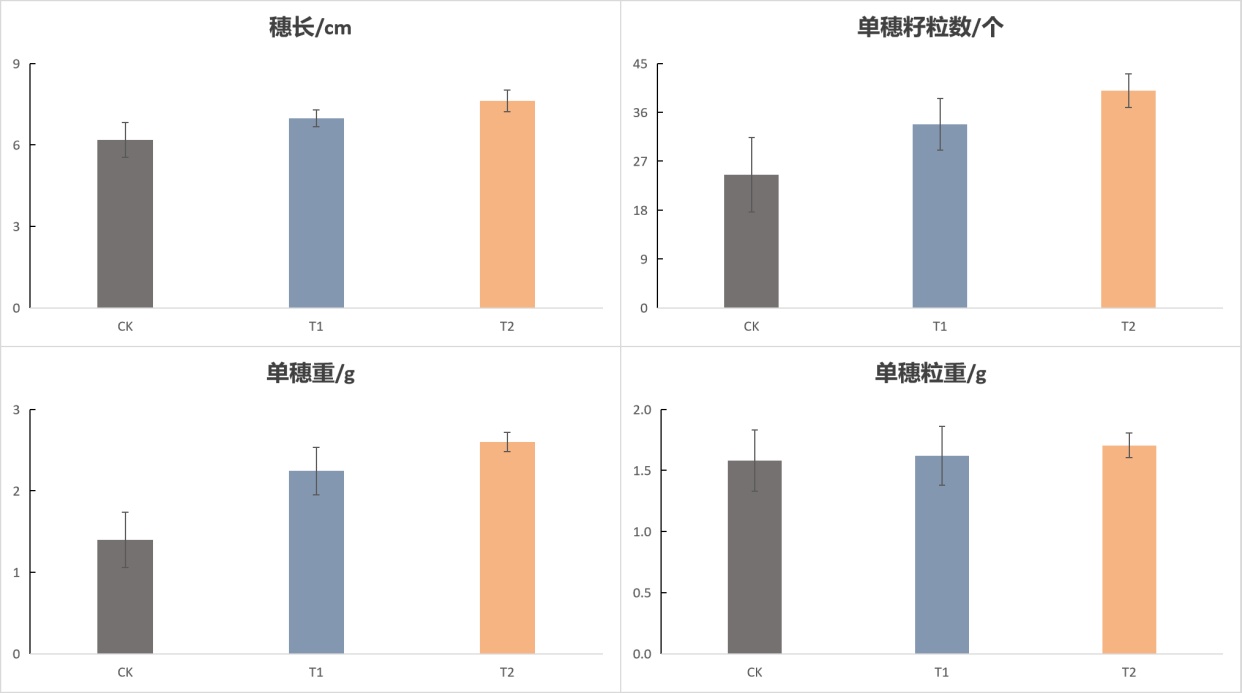
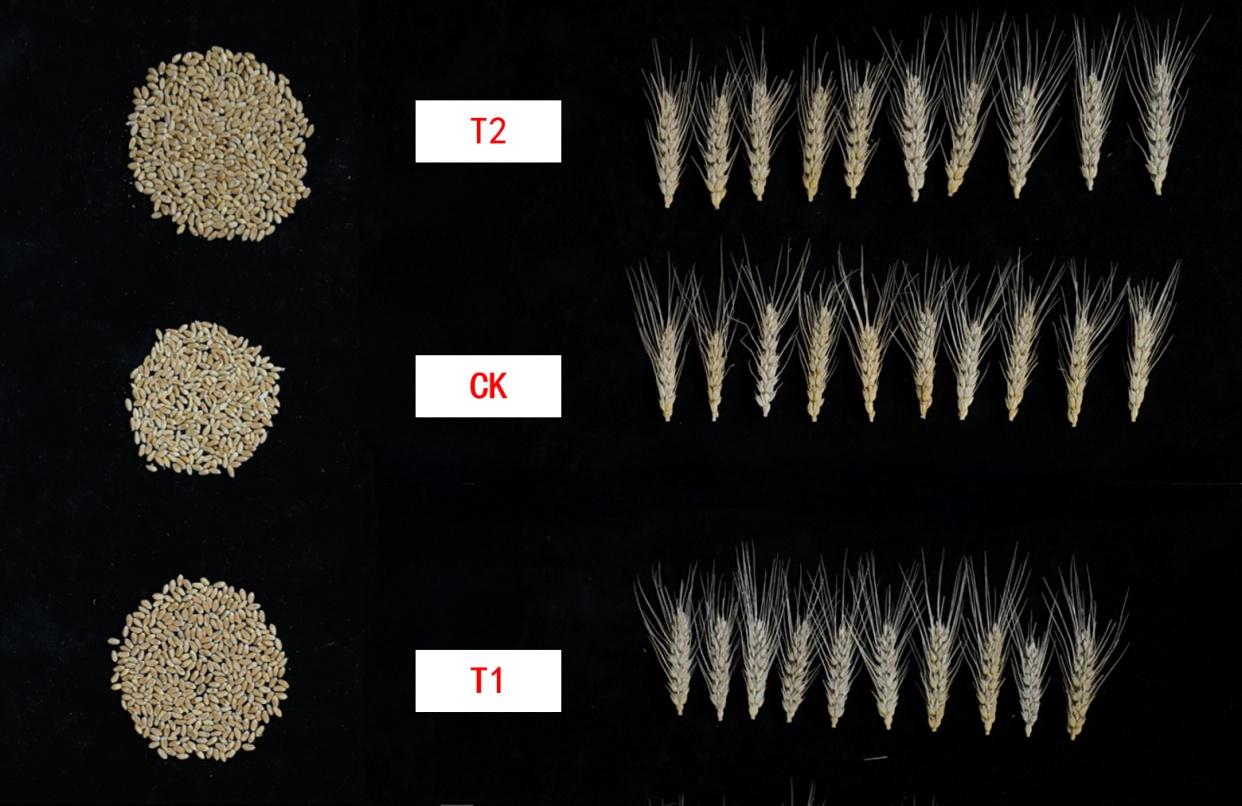
Table 7 Yield and Economic Benefit Investigation
|
|
Moisture Content (%) |
Yield (kg) |
Spike No. (×10⁴) |
1000-kernel Weight (g) |
Output Value (¥) |
Cost (¥) |
Profit (¥) |
|
CK |
13.35 |
457.78 |
28.97 |
42.70 |
1098.672 |
-122.68 |
-5.312 |
|
T1 |
12.75 |
511.11 |
31.55 |
48.70 |
1226.664 |
/ |
/ |
|
T2 |
13.45 |
566.67 |
33.14 |
50.90 |
1360.008 |
17.5 |
115.84 |
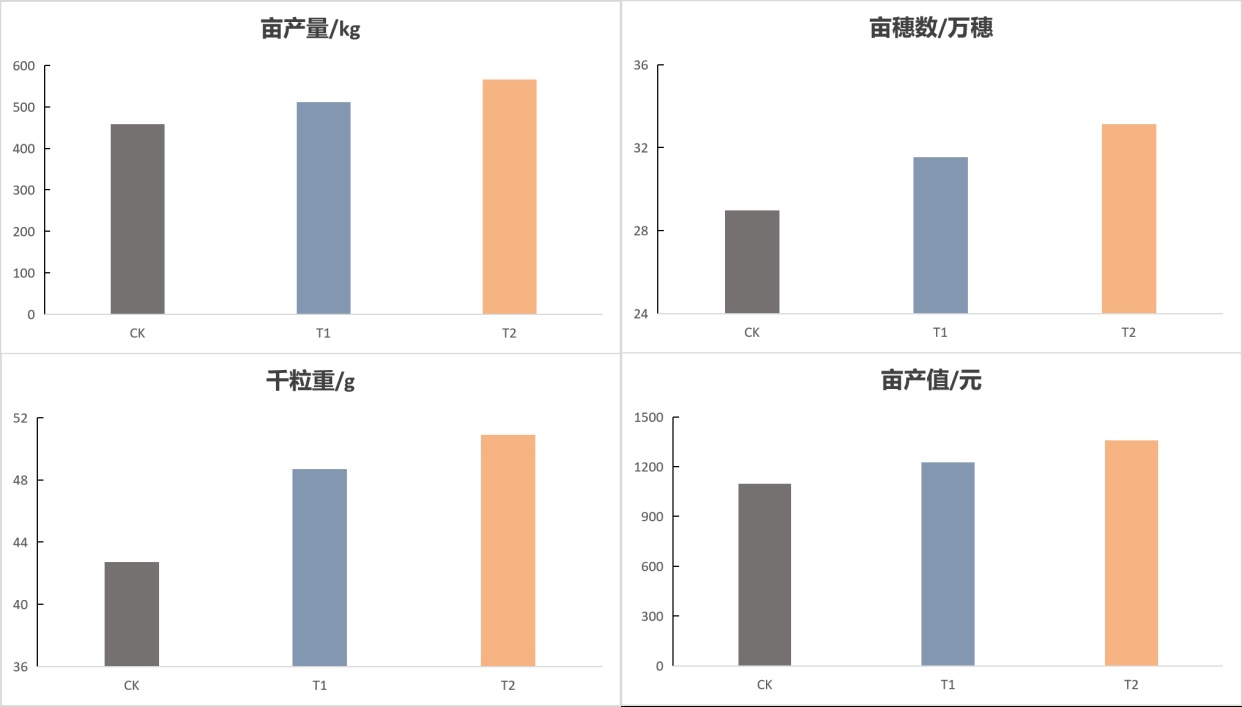
The yield and economic benefit survey showed that AOS application significantly increased wheat yield, spike number, and output value. Compared with conventional T1, T2 increased yield by 55.56 kg per 667 sq.m (an increase of 10.87%), spike number by 15,900 spikes (an increase of 5.04%), and 1000-kernel weight by 2.2 g (an increase of 4.52%).
3. Conclusion
This experiment confirmed that under a 20% nitrogen reduction condition, the full-process AOS application mode of “basal application + foliar spraying at jointing and filling stages” can achieve synergistic improvement in growth promotion, yield increase, and economic benefit:
Growth-promoting effect throughout the entire growth period: Compared with the conventional fertilization control, at the reviving stage, plant height and fresh weight increased by 22.6% and 154.4%, respectively; at the jointing stage, tiller number and fresh weight increased by 85.7% and 80.7%, respectively; at the booting stage, flag leaf length and floret number per spike increased by 12.3% and 15.4%, respectively; at the filling stage, grains per spike increased by 37.6%, demonstrating a significant source-sink coordination advantage.
Outstanding yield-maintaining and yield-increasing effect under nitrogen reduction: The mature-stage yield reached 566.67 kg per 667 sq.m, representing a 10.87% increase over conventional fertilization. Spike number and 1000-kernel weight increased by 5.04% and 4.52%, respectively, truly achieving “yield maintenance despite nitrogen reduction.”
Excellent input-output benefit: Under this mode, the total AOS input is 26 g per 667 sq.m (approximately 6 ¥), while fertilizer usage is reduced by 12.5 ¥. Compared with conventional fertilization, the profit per 667 sq.m increases by 115.84 ¥, with an input-output ratio of 1:6.2. This approach combines fertilizer conservation, cost reduction, and income increase, and the recommended application technique is suitable for extension at the production scale.
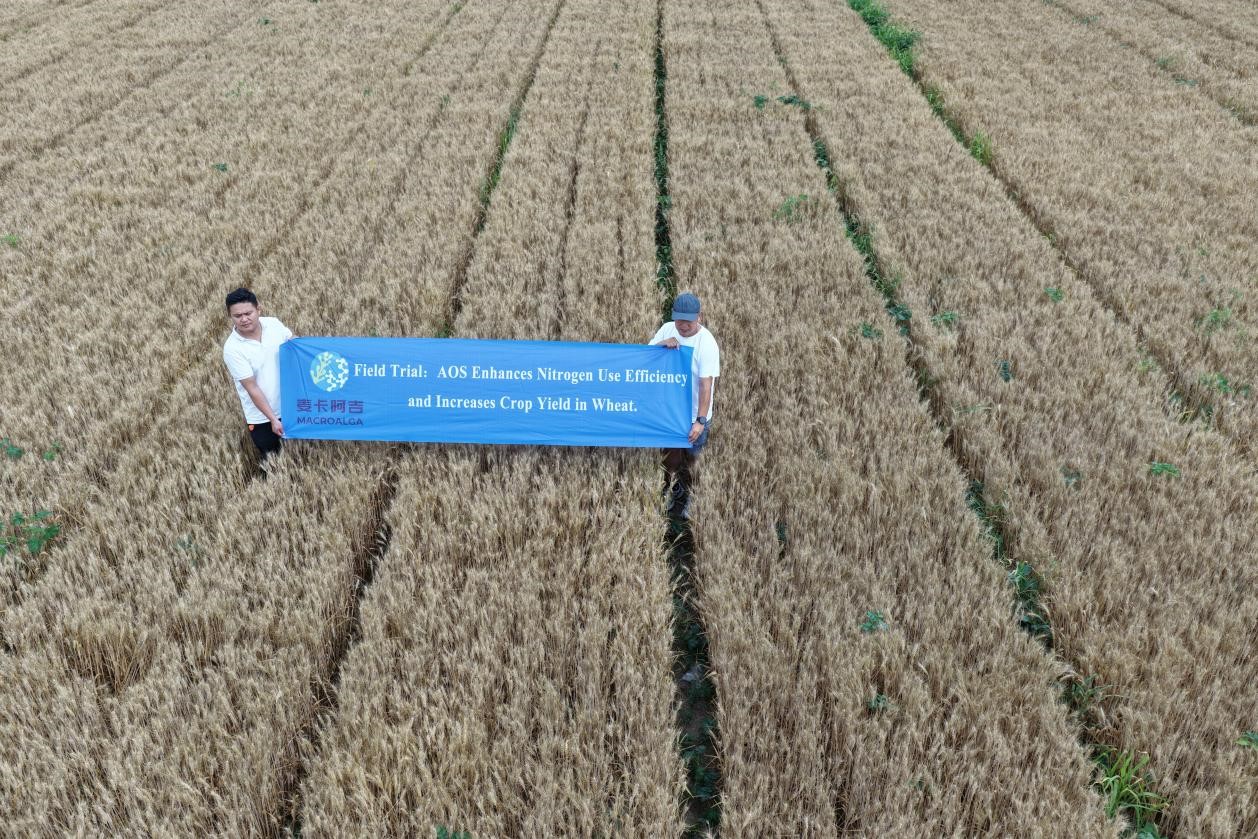
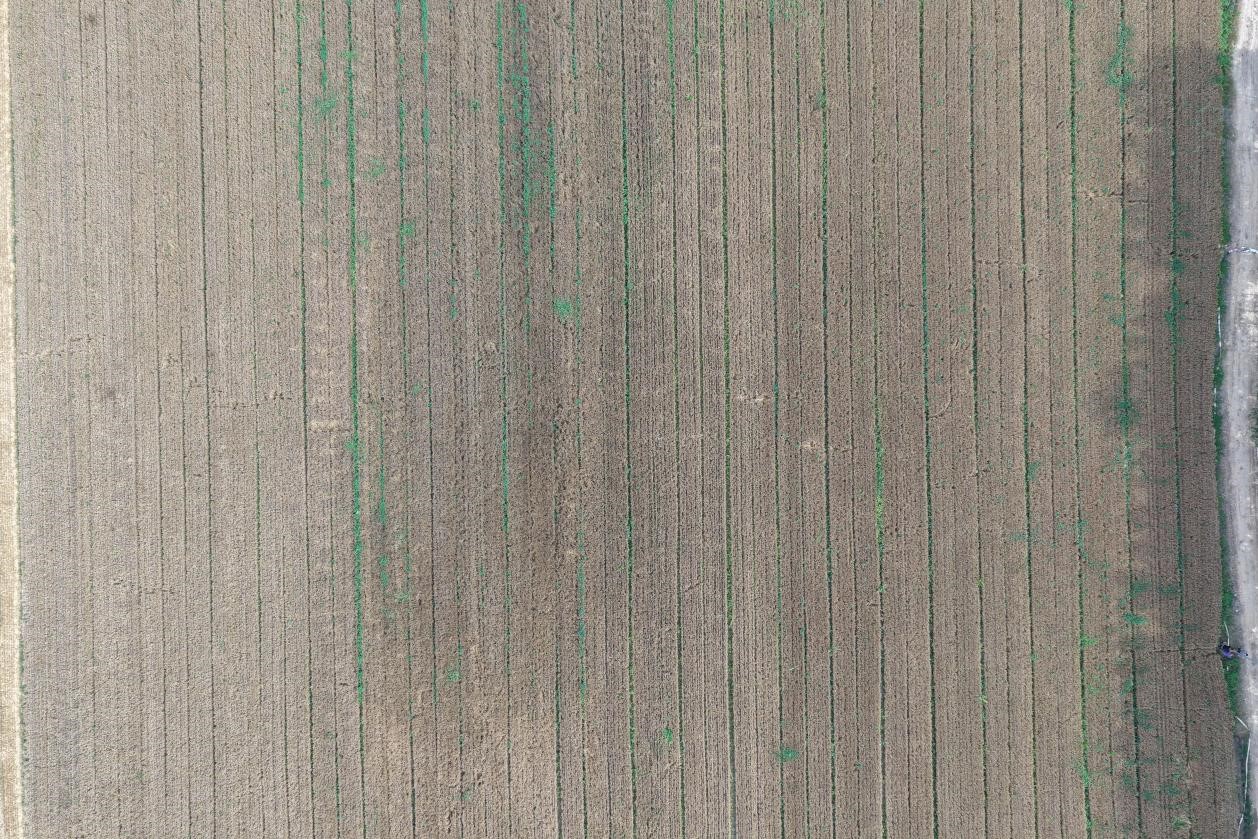
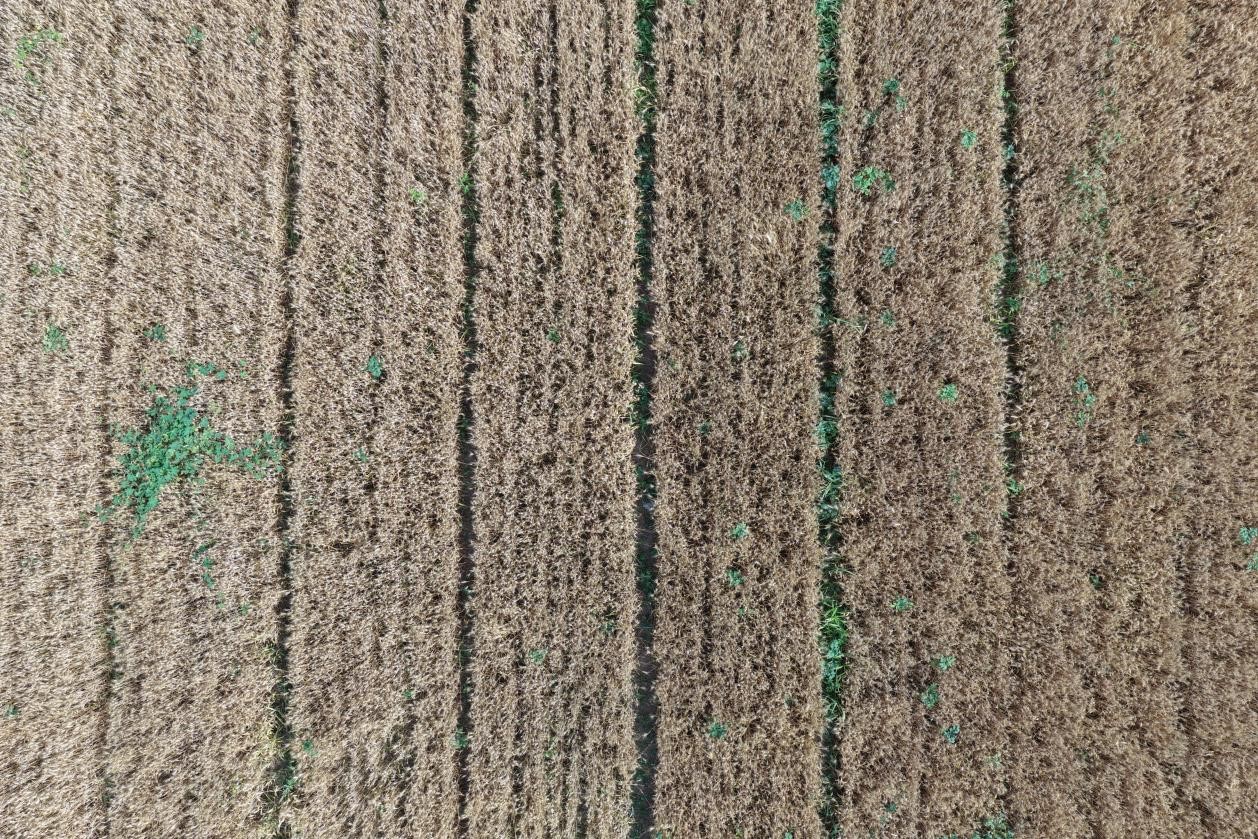
4. Photo Records
Alginate Oligosaccharide
Novel Fertilizer Synergist
A marine-derived biostimulant obtained by enzymatically degrading alginate from brown seaweed.