Mechanism of Action Studies
Chitosan Oligosaccharide (COS) in Agriculture
Chitosan oligosaccharide (COS)—also registered in agriculture as amino oligosaccharide or aminooligosaccharin—is a low-molecular-weight, water-soluble derivative of chitosan produced by the enzymatic hydrolysis of chitosan, which itself is derived from chitin found in crustacean shells (shrimp, crab, squid pen) and fungal cell walls. As a next-generation plant biostimulant, plant immune elicitor, and green biostimulant raw material, COS is widely recognized as a “plant vaccine” capable of inducing systemic acquired resistance (SAR) and pattern-triggered immunity (PTI) in crops. Backed by Qingdao MacroAlga Co., Ltd.’s proprietary acetic-acid enzymatic platform, our COS delivers 93.4% purity, DP3–DP7 ≥ 80%, and an average molecular weight of ~800 Da. This article provides a comprehensive, peer-reviewed survey of COS research history, molecular mechanisms, agricultural applications, and the unique advantages of Qingdao MacroAlga’s technology.
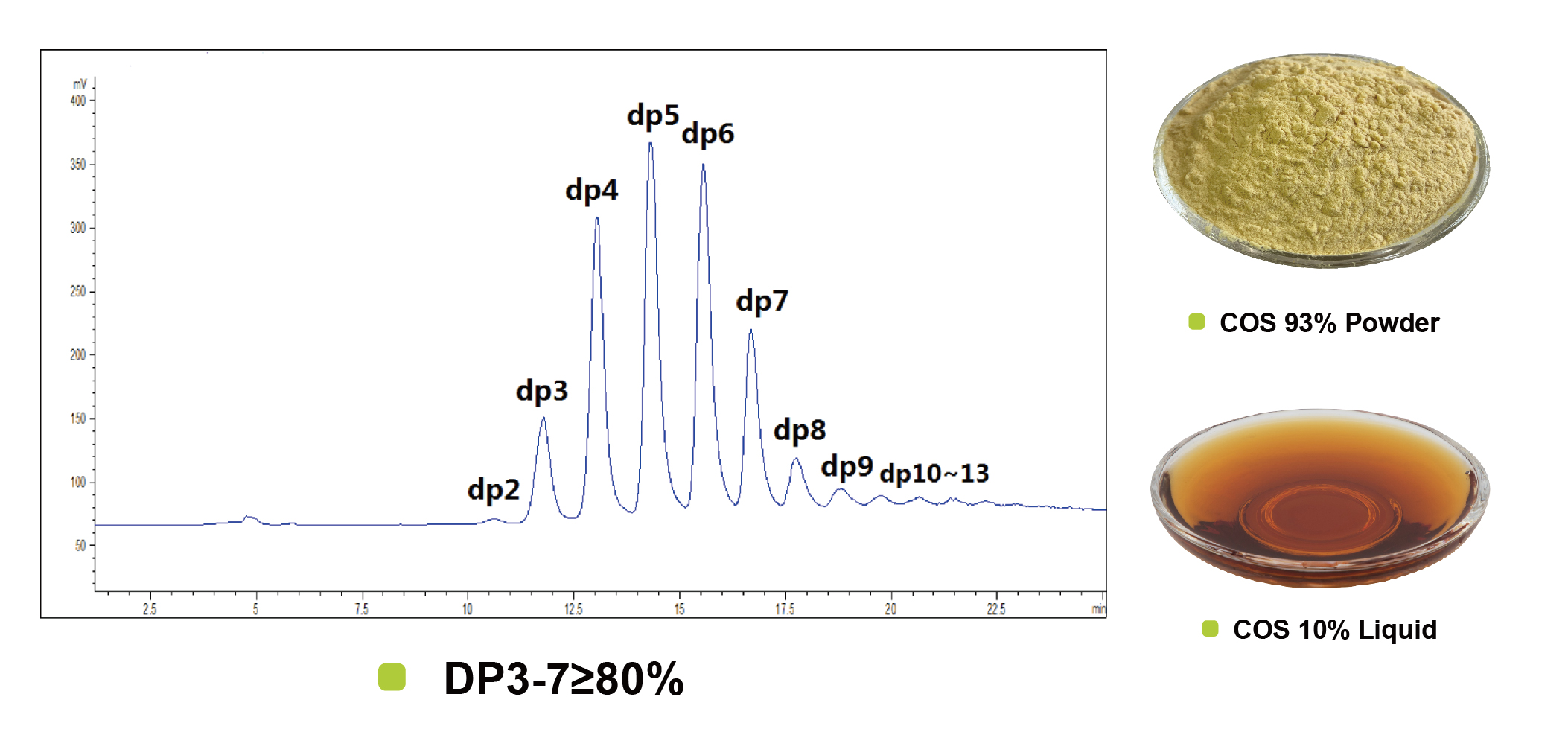
Light yellow, high-clarity COS powder, 500 t/year capacity
Quick Navigation:
1. What Is Chitosan Oligosaccharide? · 2. Research History & Milestones · 3. International Development (Japan, Korea, EU, US) · 4. Molecular Mode of Action · 5. Signaling Pathways (SA/JA/ABA) · 6. Agricultural Applications & Field Data · 7. Abiotic Stress Tolerance · 8. Post-Harvest & Shelf-Life · 9. Synergy with Microbes & Fertilizers · 10. Qingdao MacroAlga Advantages · 11. FAQ
1. What Is Chitosan Oligosaccharide?
Chitosan oligosaccharide is the product of enzymatic or chemical depolymerization of chitosan, a deacetylated derivative of chitin. Chitin itself is a linear β-(1→4)-linked polymer of N-acetylglucosamine and is the second most abundant biopolymer on Earth, found in crustacean exoskeletons, insect cuticles, and fungal cell walls. Chitosan is obtained by deacetylating chitin—a process first described by French scientist Rouget in 1859, with the product later named “chitosan” by German biologist Hoppe-Seyler in 1894.
However, both chitin and high-molecular-weight chitosan suffer from poor water solubility and high viscosity, which severely limit their biological activity and practical application. The breakthrough came with the realization that lowering the molecular weight through enzymatic hydrolysis produces short-chain oligomers (DP2–DP20) with dramatically improved solubility, bioavailability, and bioactivity. These short chains—COS—are the only naturally occurring positively charged alkaline oligosaccharides, a property that underpins their ability to interact with negatively charged microbial membranes and plant cell-wall components.
In human nutrition and medicine, chitosan and its oligomers are sometimes called the “sixth life element” after proteins, fats, carbohydrates, vitamins, and minerals—a term popularized in Japan and Europe in the 1990s. In agriculture, however, COS is valued not as a nutrient but as a signaling molecule that activates the plant’s own immune, growth, and stress-response systems.
2. Research History & Key Milestones
The scientific journey of COS spans more than two centuries and crosses multiple disciplines—from structural chemistry to plant pathology to molecular biology. The following timeline highlights the pivotal discoveries:
| Year | Milestone |
|---|---|
| 1811 | French chemist Henri Braconnot isolates “fungina” (later renamed chitin) from mushrooms. |
| 1859 | French scientist Rouget discovers that chitin, when treated with hot concentrated KOH, yields a deacetylated product—later named chitosan. |
| 1894 | German biologist Hoppe-Seyler formally names the deacetylated product “chitosan.” |
| 1960s | Basic research on oligosaccharides as plant immune-activating factors begins. Ayers et al. (1976) show that oligosaccharide fragments from fungal cell walls induce phytoalexin synthesis in plants. |
| 1980 | Hadwiger first reports that chito/chitin oligosaccharides can induce plant immunity in pea against Fusarium solani. |
| 1981 | Bishop demonstrates that tomato pathogen-derived polygalacturonase digestion products induce protease inhibitor synthesis. |
| 1985 | US plant physiologist Peter Albersheim (University of Georgia) coins the term “oligosaccharins” and proposes that specific oligosaccharides act as signaling molecules regulating plant growth, development, reproduction, disease resistance, and defense. |
| 1990s | China launches dedicated research programs. Dalian Institute of Chemical Physics (DICP), CAS, and Chengdu Institute of Biology lead oligosaccharide studies. First Chinese symposium on chitin chemistry held in 1996 at Diaoyutai State Guesthouse, Beijing; the CAS research group is codenamed “1805.” |
| 1991 | Chitosan recognized in Europe and the US as the “sixth life element” after proteins, fats, carbohydrates, vitamins, and minerals. |
| 1994 | Japan’s Ministry of Health declares chitosan oligosaccharide a “functional food.” |
| 1998 | China’s first dedicated COS agricultural research company (Hainan Zhengye) is founded, eventually becoming a national “single champion” enterprise in COS plant immunology. |
| 1999 | China registers its first amino-oligosaccharin biopesticide. |
| 2001 | First-generation COS biopesticide technology commercialized in China; field trials begin in Jiangsu, Heilongjiang, Jilin, Liaoning, Shandong, and Beijing. |
| 2006 | Shibuya’s lab (Japan) purifies and identifies CEBiP, the first chitin oligosaccharide-binding protein, from rice plasma membrane. |
| 2007 | Discovery of CERK1 (Chitin Elicitor Receptor Kinase 1) in rice and Arabidopsis—the kinase partner required for chitin/COS signaling. |
| 2010 | DICP proposes the concept of “oligosaccharide plant vaccine”—analogous to human vaccines, COS primes plants against future pathogen attack. |
| 2012 | Crystal structure of AtCERK1 extracellular domain solved; DP dependence of COS recognition clarified. |
| 2013 | Nanjing Tech University’s Prof. Zhu Yuliang develops a simplified large-scale oligosaccharide synthesis method, lowering production costs. DICP’s “Marine Oligosaccharide Agro-Biopreparation” project wins the 2013 China Ocean Science & Technology First Prize. |
| 2014 | Hayafune et al. elucidate the “sandwich-type dimerization” model of CEBiP/CERK1 activation by chitin heptamers and octamers. |
| 2016 | China releases HG/T 4926-2016 and NY/T 2889 series standards for amino oligosaccharide products. |
| 2009–2019 | COS biostimulants integrated into China’s green crop protection system; by 2019, China has registered 5 oligosaccharide active ingredients and 159 products. |
| 2022–2026 | Surge in peer-reviewed field studies on COS in rice, wheat, maize, cotton, cucumber, pepper, potato, and horticultural crops; confirmed yield increases of 7–47% and disease control efficacy of 58–96%. |
3. International Development: Japan, Korea, Europe, and the United States
3.1 Japan – The Pioneer in Commercialization
Japan led the world in the practical application of chitin, chitosan, and COS. As early as the 1980s–1990s, Japanese researchers (notably Professor Suzuki of Tohoku Pharmaceutical University) demonstrated that chitin hexa-oligosaccharides could inhibit cancer metastasis in mice. Japanese companies were the first to market chitosan and COS as functional foods, dietary supplements, and cosmetic ingredients. By 1994, Japan’s Ministry of Health officially recognized chitosan oligosaccharide as a functional food. French coastal farmers had, in fact, used crushed shrimp/crab shell powder and kelp residue as field amendments for over a thousand years—a traditional practice that modern science later validated.
3.2 Korea – Certified Eco-Friendly Crop Input
Korea’s Ukseung Chemical Co., Ltd. developed chitosan oligosaccharide products derived from shrimp and crab shells. When used as a seed treatment, the product significantly prevented disease and increased yields in multiple crops. The Korean Ministry of Agriculture and Forestry certified chitosan-oligosaccharide biologics as environmentally friendly crop production active agents. Korean academic studies also confirmed that oral administration of COS in animal models improved gut microbiota diversity and immune parameters.
3.3 Europe & the United States – Biostimulant and Organic Market
In Europe, Belgium-based KitoZyme S.A. developed the EcoCosys® line of chitosan products certified for organic farming under EU regulations. In the US, COS is increasingly used as a biostimulant and plant immunity inducer, with research at institutions such as the University of Georgia (Albersheim’s legacy group) and Washington University in St. Louis laying the molecular groundwork. The global biostimulant market—driven in part by COS and other oligosaccharide-based products—is projected to grow from USD 3.14 billion in 2022 to USD 6.69 billion by 2029 at a CAGR of 11.43%.
3.4 China – From Follower to Global Leader
China’s COS research began in the 1990s with the Chinese Academy of Sciences (CAS). Today, Chinese institutions—including DICP, the Qingdao Institute of Bioenergy and Bioprocess Technology (QIBEBT, CAS), Shenyang Agricultural University, and the Chinese Academy of Agricultural Sciences—are global leaders in COS molecular biology, field application, and industrial production. In 2009, COS-treated pears from Shaanxi Province met Australian export standards for pesticide residues, achieving China’s first export of COS-treated fruit to Australia. Today, COS is used on wheat, rice, maize, cotton, vegetables, and fruit across more than 20 Chinese provinces.
4. Molecular Mode of Action: From Receptor Recognition to Defense Gene Expression
The biological activity of COS is not a vague “nutritional” effect—it is a precisely orchestrated molecular dialogue between an exogenous oligosaccharide signal and the plant’s innate immune surveillance system. The process can be broken down into five stages:
4.1 Stage 1: Cell-Surface Recognition by LysM Receptors
Plants cannot “see” pathogens directly, but they can detect conserved microbial molecular patterns. Chitin and chitosan oligosaccharides are recognized as Microbe-Associated Molecular Patterns (MAMPs). The key plant receptors belong to the LysM-RLK family (LysM-containing Receptor-Like Kinases):
- CEBiP (Chitin Elicitor-Binding Protein): Identified in rice by Shibuya’s lab in 2006. Contains LysM domains for extracellular chitin/COS binding but lacks an intracellular signaling domain—it is the “sensor.”
- CERK1 (Chitin Elicitor Receptor Kinase 1): Identified independently in rice and Arabidopsis in 2007. Contains both LysM ectodomain and an intracellular Ser/Thr kinase domain—it is the “signal transducer.”
- AtLYK1 / AtCERK1 (Arabidopsis homolog): Crystal structure solved in 2012; confirms that DP controls receptor dimerization.
4.2 Stage 2: Sandwich Dimerization & Receptor Activation
The breakthrough discovery by Hayafune et al. (2014) showed that one chitin/COS oligomer binds two CEBiP molecules simultaneously from opposite sides, forming a “sandwich” dimer. This ligand-induced dimerization recruits CERK1, creating an active signaling complex. Crucially:
- DP matters: Longer oligomers (DP7–DP8, e.g., chitoheptaose) induce the strongest dimerization and ROS burst.
- Acetyl groups matter: N-acetyl moieties are essential for binding; fully deacetylated chitosan oligomers (DA 0%) fail to elicit immune responses in Arabidopsis and rice.
- Threshold effect: A minimum DP of ~9 (at DA 35%) or DP5–DP7 (at higher DA) is required for robust elicitation.
4.3 Stage 3: Intracellular Signaling Cascade
Once CERK1 is activated, it triggers a bifurcated intracellular signaling cascade:
- RLCK phosphorylation: CERK1 phosphorylates downstream Receptor-Like Cytoplasmic Kinases such as BIK1 and PBL27.
- ROS burst: BIK1 phosphorylates the NADPH oxidase RBOHD, generating a rapid apoplastic reactive oxygen species (ROS) burst that cross-links cell-wall proteins and acts as a secondary messenger.
- MAPK cascade: Activation of MAPK3/6 leads to phosphorylation of WRKY and ERF transcription factors.
- Calcium signaling: Ca²⁺ influx through CDPKs amplifies the response.
- Extracellular alkalinization: A measurable pH shift in the apoplast serves as a hallmark of immune activation.
4.4 Stage 4: Transcriptional Reprogramming & Defense Protein Production
The activated transcription factors drive expression of:
- PR proteins: PR1, PR5, PR10 – pathogenesis-related markers
- Chitinases & β-1,3-glucanases: Enzymes that degrade fungal cell walls
- Phenylalanine ammonia-lyase (PAL): Key enzyme in phenylpropanoid/phytoalexin biosynthesis
- Peroxidase (POD) & polyphenol oxidase: Oxidative defense enzymes
- Lignin & callose deposition: Physical fortification of cell walls
4.5 Stage 5: Systemic Acquired Resistance (SAR)
The local immune response is not confined to the site of perception. Plants transmit the signal systemically via salicylic acid (SA) and methyl salicylate (MeSA) to induce SAR in distal, uninfected tissues. This whole-plant immunity is the molecular basis for the “plant vaccine” analogy—COS primes the plant so that subsequent pathogen attack is met with a faster, stronger, and more coordinated defense.
5. Key Signaling Pathways Activated by COS
COS does not act through a single linear pathway. Depending on the plant species, tissue, and COS structure, it activates multiple interconnected signaling networks:
| Pathway | Key Hormones / Molecules | Major Outcome |
|---|---|---|
| SA pathway | Salicylic acid, MeSA, NPR1, PR1/PR5/PR10 | SAR against biotrophic pathogens (viruses, rusts, powdery mildew) |
| JA/ET pathway | Jasmonic acid, ethylene, LOX, PAL | Defense against necrotrophic fungi and herbivory; synergizes with SA |
| ABA pathway | Abscisic acid, proline, soluble sugars | Abiotic stress tolerance (drought, salinity, cold) |
| Auxin/GA pathway | Auxin, gibberellins, cytokinins | Root elongation, stem growth, fruit set, yield increase |
| ROS/Ca²⁺ signaling | RBOHD, CDPK, MAPK3/6 | Rapid local defense, cell-wall fortification |
| Flavonoid biosynthesis | PAL, CHS, flavonoids | Nematode resistance (Pinus koraiensis study, 2025) |
A landmark 2024 study in Carbohydrate Research showed that COS treatment of Arabidopsis against Tobacco mosaic virus (TMV) activated the SA pathway, with NPR1, PR1, PR5, and PR10 genes strongly upregulated. The same year, research on pepper (Capsicum) infected with Cucumber mosaic virus (CMV) confirmed that 100 mg/L COS achieved 56.65% antiviral activity—significantly outperforming the commercial plant activator “NNMS” at the same concentration (34.34%)—via SA and calcium signaling synergism.
6. Agricultural Applications & Field Trial Data
6.1 Crop Yield Improvement
COS is not merely a “disease control” input—it is a proven yield enhancer. Multiple peer-reviewed field trials across cereals, vegetables, and oil crops report consistent yield gains:
| Crop | COS Treatment | Yield Increase | Reference / Notes |
|---|---|---|---|
| Rice (BRRI dhan29) | 500 ppm foliar spray | +25–45% | Elsevier, 2024; +26% vs conventional alone |
| Wheat (multiple cultivars) | Seed dressing + foliar spray | +2–13.6% | SCI, 2014; spike & grain number up |
| Maize | Foliar spray | +20.5–39.8% | SCI review, 2024 |
| Potato (Xisen 6) | 12 g/667m² foliar spray | +20.9% | 2025 field trial; SPAD +59, single-plant FW 747.4 g |
| Oilseed rape | Seed treatment + 3 foliar sprays | +9.67% | CAS DICP field data |
| Tomato | 1:3000 foliar spray | +16.5% | Summer high-T/humidity trial; virus suppressed |
| Pepper | 2–5 g/L foliar | +23.16% (5 g/L) | Shandong Chem. Ind. J., 2018 |
| Chives | 600× dilution, 3× applications | +25.49% | Farmer Consultant, 2019 |
| Soybean | 450 mL/ha foliar | Improved protein content | 2024 thesis; also mitigates herbicide injury |
| Cotton | Bacillus amyloliquefaciens KW5 + COS | Disease index −52.85% | 2026 synergy study; photosynthetic rate +151% |
| Spinach / Lettuce | 50–100 ppm | +20–25% biomass | Market research data, China |
6.2 Disease Resistance & Biocontrol
COS activates broad-spectrum resistance against fungi, bacteria, viruses, and nematodes. Representative field and laboratory results include:
- Viral diseases: Tobacco mosaic virus (TMV) resistance in Arabidopsis via SA pathway; Cucumber mosaic virus (CMV) in pepper at 56.65% efficacy; commercial tobacco product “ZhiNengCong” enhances RNAi via SA signaling.
- Fungal diseases: Powdery mildew and fusarium wilt control 79–96%; rice blast reduced via phenolic secondary metabolites; tomato leaf mold 82.7% control; grape downy/powdery mildew reduced under low inoculum pressure.
- Bacterial diseases: Bacterial spot, bacterial blight, and Pseudomonas spp. suppressed via POD/PAL/chitinase induction.
- Nematodes: COS + avermectin reduces nematode density by 58.3% vs avermectin alone; root-knot nematode eggs damaged by induced chitinases; Pinus koraiensis tolerance to Bursaphelenchus xylophilus enhanced via flavonoid pathway.
6.3 Recommended Application Methods
| Method | Dosage | Timing |
|---|---|---|
| Seed treatment | 0.1–0.5% (w/w) coating; 50–100 ppm soak 4–8 h | Pre-sowing |
| Foliar spray | Dilute 20,000–30,000× (200–300 mL/ha) | Seedling, pre-flowering, fruit set, enlargement |
| Soil / drip irrigation | 400–500 g/ha per application | Vegetative & fruit stages |
| Fertilizer additive | 0.5–1 kg/ton for NPK; 1–2 kg/ton for liquid | Blending stage |
7. Abiotic Stress Tolerance: Drought, Salinity, Cold, and Herbicide Stress
Beyond biotic stress, COS is one of the most thoroughly documented biostimulants for abiotic stress mitigation. A 2021 review in Carbohydrate Polymers and a 2022 PMC review on cereals identified four major stress categories where COS consistently improves crop performance:
7.1 Drought Stress
- Enhances root fresh/dry weight under water deficit.
- Increases proline, soluble sugars, ascorbate, and glutathione accumulation.
- Boosts water-use efficiency and carbohydrate energy metabolism (metabolomics evidence).
- Wheat under limited irrigation: flag leaf area and shoot dry weight increased.
- Rice after rehydration: higher fresh/dry weight recovery.
- β-aminobutyric acid-modified COS (COS-BABA) showed enhanced drought induction.
7.2 Cold Stress
- Cucumber (2023 transcriptomic study): 50 mg/L COS was optimal; increased chlorophyll, photosynthetic capacity, osmotic regulators, and antioxidant enzymes; reduced relative conductivity and MDA. Key genes enriched in phenylpropanoid biosynthesis, MAPK signaling, and auxin response.
- Wheat (Jimai 22) under chilling: improved shoot/root length and fresh/dry weight.
- Maize under low temperature: significant increase in shoot height and dry weight.
- Rice: improved root vigor under cold stress.
7.3 Salt Stress
- Wheat (Jimai 22): COS and sulfated COS (SCOS) increased shoot length, root length, wet and dry weight.
- Rice varieties Sakha 94 & Gemmieza 9: improved growth parameters.
- Maize: reduced negative effects of salt stress on shoot dry weight; improved root length and plant height.
- Mechanism: increased osmotic regulators, antioxidant enzyme activity, photosynthetic capacity, and root growth.
7.4 Herbicide & Chemical Stress Mitigation
A 2024 Chinese study on soybean demonstrated that 450–600 mL/ha COS sprayed after fomesafen herbicide application significantly restored plant height, chlorophyll content, and yield compared to herbicide-only controls. At 450 mL/ha, COS outperformed the commercial antidote “Bihu” in reversing herbicide injury—making COS a valuable tool for herbicide stress recovery in modern no-till and GM cropping systems.
8. Post-Harvest Application & Shelf-Life Extension
COS forms an edible, semi-permeable film on fruit and vegetable surfaces, combining a physical barrier with an internal elicitor effect:
- Citrus: 10 g/L COS inhibited Penicillium digitatum lesion expansion, activated H₂O₂ and antioxidant systems, and maintained cell-wall polysaccharides.
- Grapes & strawberries: Maintained fruit quality, induced JA biosynthesis, enhanced resistance to Botrytis cinerea during cold storage.
- Apples: Upregulated PR genes, preserved firmness and soluble solids, reduced blue mold (Penicillium expansum).
- Papaya: Chitosan coatings improved physicochemical characteristics during cold storage.
- Kiwifruit: Shelf life extended from 10–13 days to 70–80 days in preservation studies.
- General vegetables: 7–14 days additional shelf life; spoilage reduced up to 30%.
COS post-harvest treatments are particularly valuable for export-oriented fruit producers who must meet strict residue limits while maintaining quality during long-distance transport.
9. Synergy with Microbes, Fertilizers, and Chemical Pesticides
9.1 COS + Beneficial Microbes
COS and plant-growth-promoting rhizobacteria (PGPR) act synergistically. A 2026 study on cotton using Bacillus amyloliquefaciens KW5 + COS showed:
- Stomatal conductance, transpiration, net photosynthetic rate, CAT, SOD, POD: all significantly higher than either treatment alone.
- MDA content reduced by 36.09%; disease index reduced by 52.85%; biocontrol efficacy 53.00%.
- Synergistic COS + endophytic fungus Pochonia chlamydosporia provided sustainable nematode management in banana.
9.2 COS + Chemical Pesticides
COS is not a replacement for all chemicals but a powerful IPM-enabling tool. Field data show that COS + reduced-dose fungicide/bactericide/insecticide programs can:
- Reduce chemical fungicide use by up to 90% in some programs.
- Delay pathogen resistance development.
- Provide dual-mode action: chemical kill + plant immune priming.
- Improve fertilizer nitrogen-use efficiency when co-applied.
9.3 Soil Health & Rhizosphere Ecology
- Stimulates proliferation of chitinolytic microbes that degrade nematode egg cuticles.
- Promotes beneficial rhizobacteria (Pseudomonas, Bacillus spp.).
- Suppresses soil-borne pathogens (Fusarium, Phytophthora, Pythium).
- Enhances soil organic matter mineralization and nutrient cycling.
10. Qingdao MacroAlga Chitosan Oligosaccharide: Technology & Advantages
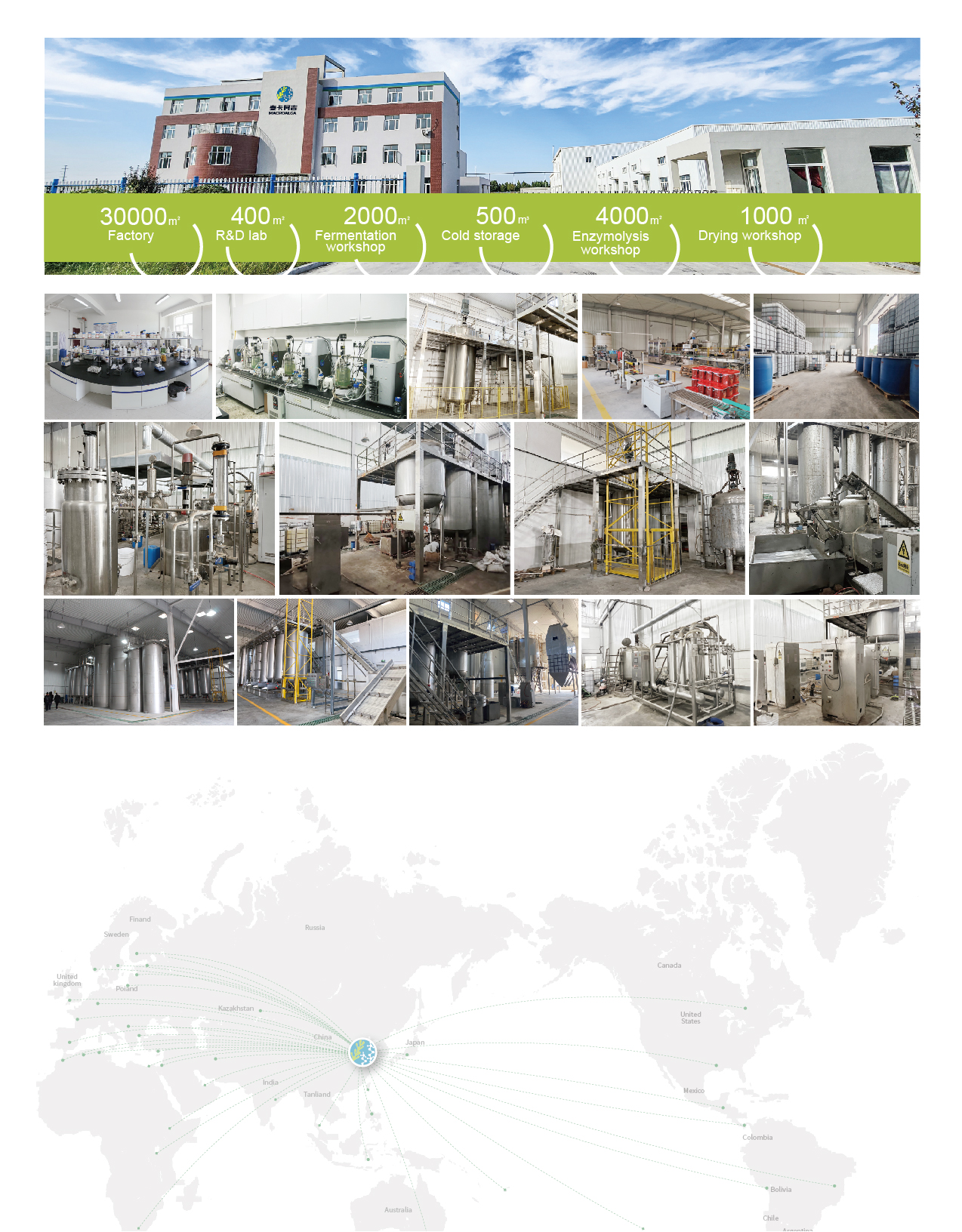
Qingdao MacroAlga Co., Ltd. is a technology commercialization enterprise founded by the Qingdao Institute of Bioenergy and Bioprocess Technology (QIBEBT), Chinese Academy of Sciences (CAS). We focus on the research, development, and production of enzymatic biostimulant raw materials and hold four core technology patents—including alginate lyase, chitosanolytic enzymes, and enzymatic seaweed extract production processes.
10.1 Verified Quality (Shenyang Pesticide Inspection Center)
| Parameter | MacroAlga Specification |
|---|---|
| Appearance | Light Yellow Powder |
| Chitosan Oligosaccharide Content | 93.4% |
| DP3–DP7 Content | ≥ 80% |
| Average Molecular Weight | 773 Da |
| Degree of Deacetylation | ≥ 90% |
| Monosaccharide (Glucosamine) | Only 0.03% |
| Moisture | ≤ 6% |
| Ash Content | ≤ 1% |
| pH Value (1% solution) | 5.0–6.5 |
| Water Insoluble Matter | ≤ 0.01% |
10.2 Proprietary Acetic-Acid Enzymatic Process
- Acetic-acid system: Produces the smallest anion with mild acidity and full volatility—ideal for high-grade COS formulations. Outperforms lactic- and citric-acid systems in purity and chroma.
- Narrow DP distribution: DP3–DP7 ≥ 80% ensures maximum plant elicitor activity.
- Low molecular weight (~800 Da): Rapid absorption through leaf cuticles and root systems.
- Wide pH stability: Stable across pH 1–14, compatible with most agrochemical tank mixes.
- True oligomers, not monomers: Only 0.03% free glucosamine proves bioactivity comes from oligosaccharides rather than hydrolyzed monomers.
10.3 Scalable Portfolio for Global Formulators
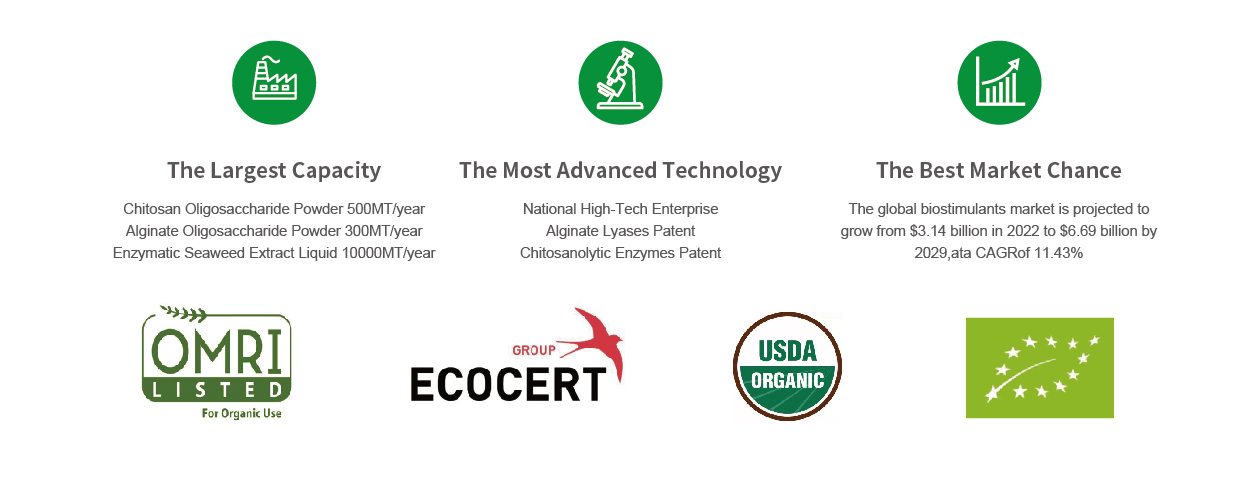
- Chitosan Oligosaccharide Powder: 500 t/year – China’s largest COS capacity
- Alginate Oligosaccharide Powder: 300 t/year
- Enzymatic Seaweed Extract: 10,000 t/year
- Chicken-derived Peptide & Plasma Protein: 1,000 t/year
- Exported to 30+ countries across North America, Europe, Latin America, Asia, and Africa.
- Approved by ECOCERT for organic farming inputs.
11. Frequently Asked Questions
Q: Is chitosan oligosaccharide suitable for organic farming?
A: Yes. COS is marine-derived, biodegradable, and residue-free. It is approved by major organic certification bodies (e.g., ECOCERT) and is certified as an environmentally friendly crop input in Korea, the EU, and China.
Q: Which DP range provides the best plant elicitor activity?
A: Scientific literature consistently shows that DP3–DP7 (and especially DP5–DP8 for receptor dimerization) delivers the strongest SAR/PTI responses. MacroAlga controls this range at ≥ 80%.
Q: Can COS replace chemical fungicides completely?
A: COS is not a direct substitute for all chemicals but a strategic component of IPM programs. It reduces chemical loads, delays resistance, and provides dual-mode action (immune priming + direct antimicrobial effect).
Q: Why is degree of acetylation important?
A: N-acetyl groups are essential for binding to LysM receptors (CEBiP/CERK1). Fully deacetylated chitosan oligomers fail to elicit immune responses. MacroAlga COS maintains optimal DA for maximum bioactivity.
Q: What crops can benefit from COS?
A: Cereals (wheat, rice, maize, barley, sorghum), oil crops (soybean, oilseed rape, peanut), vegetables (tomato, pepper, cucumber, potato, leafy greens), fruit (apple, citrus, grape, strawberry, banana), ornamentals, and flowers.
Request a Technical Data Sheet, COA, or Free Sample
Explore the full specification, formulation support, and global distribution network for MacroAlga Chitosan Oligosaccharide:
View COS Product Page Visit Official Site
Contact: Kevin Zhang | WhatsApp & Tel: 0086 13505438449 | Email: kevin@macroalga.com / info@macroalga.com
R&D Center: No. 239, Keyuanjing 3rd Road, Laoshan District, Qingdao, Shandong, China
Factory: No. 88, Longquan Street, Xiazhuang Town, Gaomi, Weifang, Shandong, China
